
For new mattress importers and startup wholesale businesses, confusing international shipping terms often lead to unexpected costs, cargo risks and logistics disputes. FOB, CIF and C&F are the three most widely used trade terms in mattress cross-border trade. This article simplifies their definitions, clarifies the division of freight, insurance and risk liabilities between buyers and manufacturers, helping beginners choose the right term and ensure smooth cooperation.
1. Basic Overview of Three Core Trade Terms
FOB, CIF and C&F are classic Incoterms applied to sea freight, which dominate mattress bulk shipment worldwide. The core difference lies in who takes charge of ocean freight and cargo insurance, as well as the timing of risk transfer. Understanding these rules is the first step to stable mattress import business.
2. Detailed Explanation of Each Shipping Term
2.1 FOB (Free On Board)
Under FOB terms, the mattress factory is only responsible for delivering goods to the designated port, completing customs declaration and loading products onto the vessel.
- Factory’s responsibilities: Production, domestic transportation to port, export customs clearance, loading on board.
- Buyer’s responsibilities: Arrange ocean freight, purchase cargo insurance, bear all risks and costs after goods are loaded.
- Applicable scenario: Ideal for importers who have long-term cooperative freight forwarders and want to control the whole logistics chain. It is a popular choice for experienced mattress buyers.
2.2 C&F (Cost and Freight)
Also known as CFR, C&F includes product cost and ocean freight, excluding insurance.
- Factory’s responsibilities: Deliver qualified mattresses, handle export customs clearance, pay for ocean freight and send shipment notice to the buyer promptly.
- Buyer’s responsibilities: Purchase cargo insurance independently, take over goods at destination port, and undertake all risks after loading.
- Key reminder: The buyer must buy insurance in time after receiving shipment notice, to avoid loss once accidents happen during transit. This term balances workload for both sides and is commonly used in medium-volume mattress orders.
2.3 CIF (Cost, Insurance and Freight)
CIF covers product cost, ocean freight and cargo insurance, which is the most inclusive term for new importers.
- Factory’s responsibilities: Finish production, export declaration, pay for ocean freight and buy basic cargo insurance till the destination port.
- Buyer’s responsibilities: Receive goods at the destination port, handle import customs clearance and follow-up local delivery. Risks are transferred to the buyer once mattresses are loaded on board.
- Applicable scenario: Perfect for import beginners without fixed forwarders. It greatly reduces logistics operation pressure and is widely adopted for trial orders and small-batch mattress procurement.
3. Liability Comparison: Freight, Insurance & Risk Division
To help you distinguish easily, here is a clear summary of obligations under the three terms:
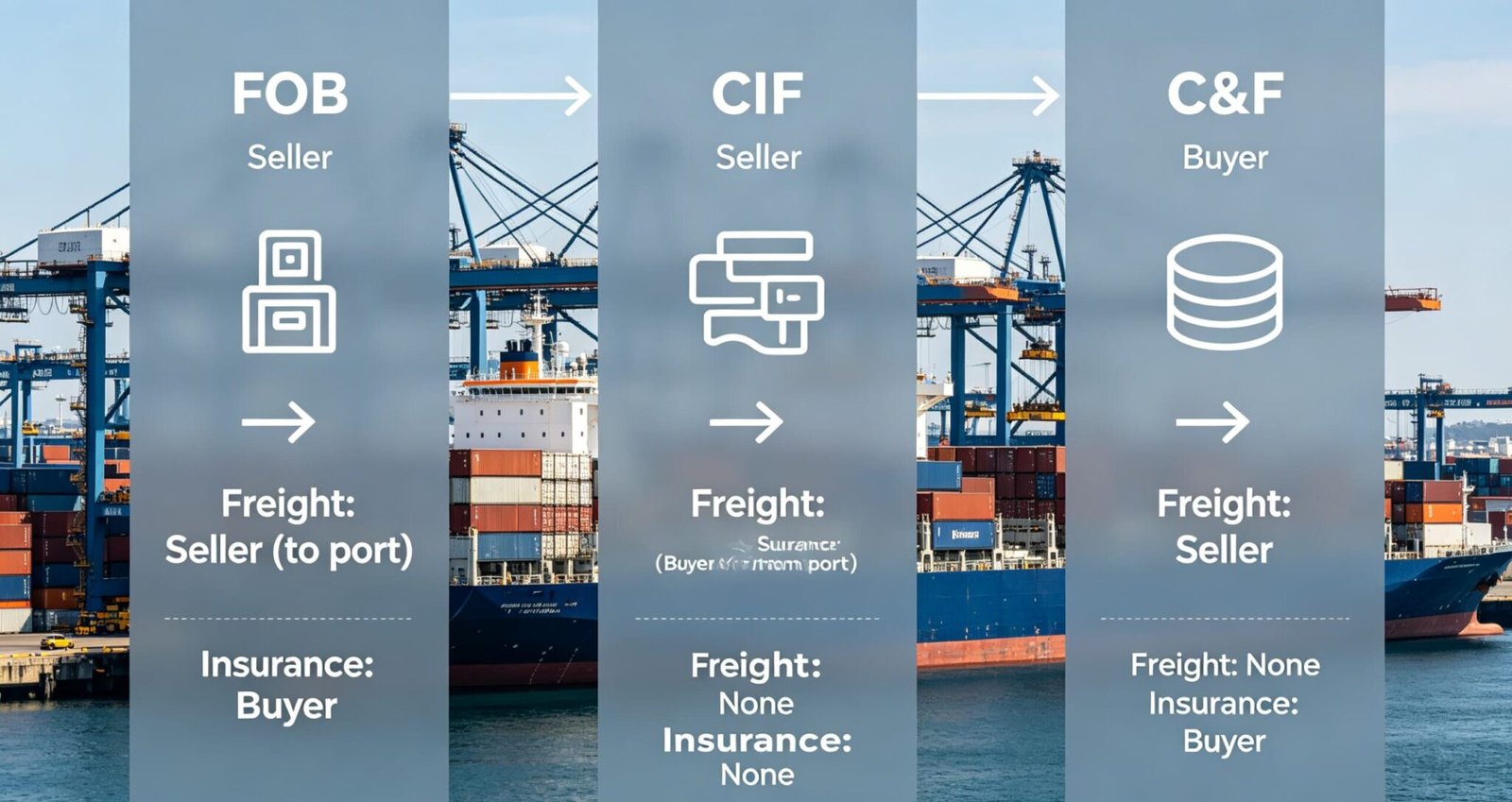
- FOB: Factory = Goods + Export clearance; Buyer = Freight + Insurance + Transit risk
- C&F: Factory = Goods + Export clearance + Freight; Buyer = Insurance + Transit risk
- CIF: Factory = Goods + Export clearance + Freight + Insurance; Buyer = Transit risk + Import clearance
No matter which term you choose, the risk of mattress damage or loss during sea transportation transfers to the buyer right after the goods are loaded onto the ship.
4. Practical Tips to Avoid Logistics Disputes in Mattress Trade
- Confirm terms clearly in contract: Write down the exact trade term, port name and liability scope in the sales contract, to prevent ambiguous disputes later.
- Match term with order volume: New importers and trial orders are recommended to choose CIF; regular large bulk orders can select FOB to cut logistics cost.
- Pay attention to shipment notice: For C&F orders, the factory must send formal shipment notice immediately after loading, so the buyer can arrange insurance in a timely manner.
- Check packaging for sea transport: Mattresses are bulky goods. Require the factory to use moisture-proof and reinforced packaging, reducing damage risks during long sea voyages.
Conclusion
FOB, CIF and C&F are essential knowledge for mattress import beginners. Each term has its own cost structure and liability division. By picking the suitable shipping term according to your own logistics capacity and order scale, you can effectively control costs, reduce cargo risks and avoid common logistics disputes. Mastering these rules will lay a solid foundation for long-term and stable cooperation with mattress manufacturers.