
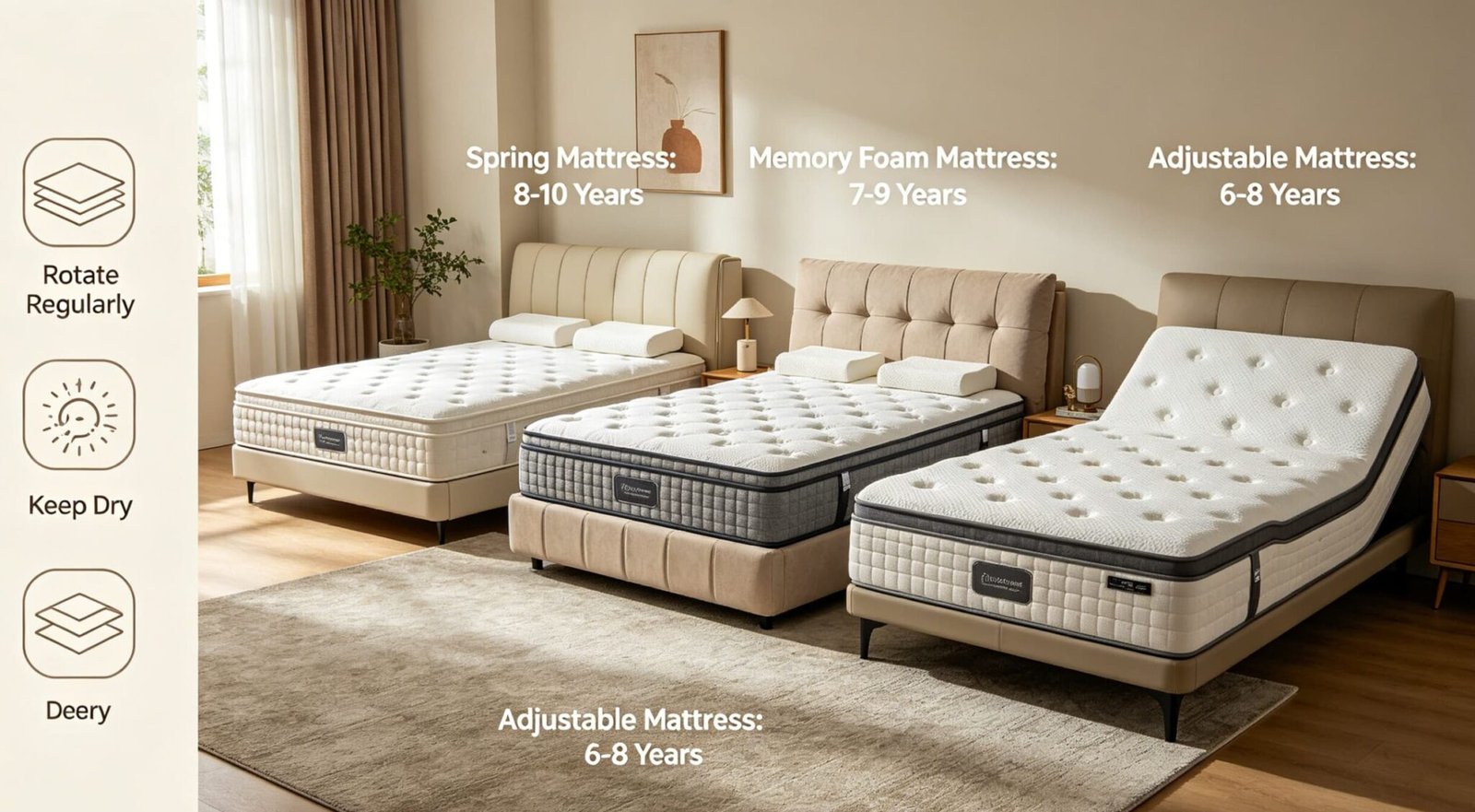
A premium mattress is a long-term investment for home use and retail sales. Many users and distributors wonder about the standard service life of different types of mattresses, as well as how to keep them in good condition for years. This article breaks down the lifespan of spring, memory foam and adjustable smart mattresses, and shares easy-to-follow daily maintenance advice to maximize their usage time.
1. Average Service Life of Different Mattress Types
1.1 Spring Mattress
Traditional spring mattresses are durable and widely used worldwide. High-quality models with reinforced steel springs and qualified fabrics can normally serve 8 to 10 years.
Well-made internal structures resist sagging and squeaking. However, low-grade springs will lose elasticity gradually after long-term compression, leading to uneven support and shortened lifespan.
1.2 Memory Foam Mattress
CertiPUR-US certified high-density memory foam mattresses have a service life of 7 to 9 years. Premium foam material is resistant to permanent indentation and hardening.
Low-density foam tends to deform quickly under body weight, so its usable life will drop to only 3 to 5 years. Proper use can effectively retain the foam’s original softness and support.
1.3 Adjustable Smart Mattress
Equipped with electric drive systems like Okin motors, adjustable zero gravity mattresses have a comprehensive service life of 6 to 8 years.
The foam and fabric parts share similar durability with ordinary mattresses. The core electric components have stable performance under normal use. Once the motor or control system fails, the whole adjustable function will be affected.
2. Common Signs That Mean It’s Time to Replace the Mattress
Even before reaching the maximum service life, you need to replace the mattress if you notice the following problems:
- Obvious sagging, dents or uneven surface that cannot rebound.
- Abnormal squeaking sounds from internal springs or structures.
- Persistent odors, mold or serious fabric wear.
- Frequent back pain and poor sleep after waking up.
3. Practical Daily Maintenance Tips to Extend Service Life
3.1 Regular Flip and Rotate
Flip or rotate the mattress every 2 to 3 months. This balances compression on all areas, preventing partial sagging. For one-sided comfort mattresses, simply rotate the head and foot ends instead of flipping top to bottom.
3.2 Keep Dry and Ventilated
Place the mattress in a dry and well-ventilated room. Avoid long-term exposure to moisture, which causes mold, mildew and foam deterioration. You can expose it to natural ventilation regularly on sunny days, but do not leave it under strong direct sunlight for too long.
3.3 Avoid Excessive Pressure
Do not stand, jump or place heavy objects on the mattress surface. Sudden strong impact will damage springs, foam and internal structures, especially harmful to adjustable mattress drive parts.
3.4 Use Mattress Protector
A waterproof and dustproof mattress cover blocks stains, sweat and dust. It protects fabric and inner materials from contamination, greatly reducing wear and extending overall service life.
3.5 Maintenance for Adjustable Smart Mattresses
For electric adjustable mattresses, check wires and controllers periodically. Do not pull the power cord forcibly. Stop using it immediately if there is abnormal noise or jitter during lifting, and conduct timely inspection.
Conclusion
Different mattresses have distinct service lifespans: spring mattresses last the longest, followed by memory foam and adjustable smart mattresses. With simple daily maintenance like regular rotation, ventilation and protection, users can effectively slow down aging and deformation. Following these tips helps every high-quality mattress deliver stable performance throughout its service life.